12–25 OCTOBER 2025
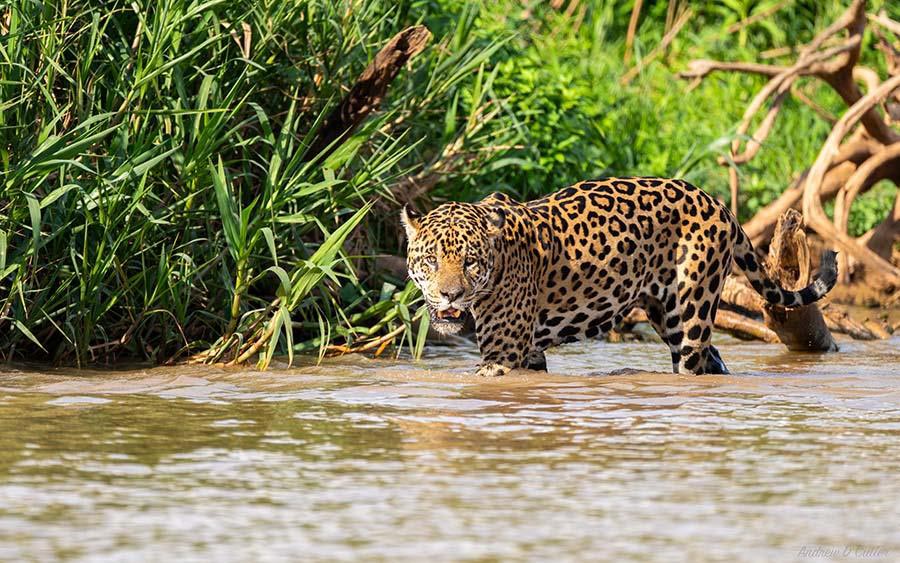
In addition to birdwatching, Jaguar was a major target of this tour (photo Andrew Cutler).
Overview
Like the Amazon, the Pantanal is a quintessential destination for those who dream of the Neotropics and want to feast their eyes on amazing birds and other wildlife. For birders in particular, the Pantanal is exceptional, boasting an extraordinary diversity of waterbirds, raptors, parrots, and songbirds, all supported by its mosaic of rivers, lagoons, gallery forests, and seasonally flooded grasslands. The region’s openness makes birding easy and rewarding, with many species visible from tracks, riverbanks, and lodge verandas.
During our 2025 birding tour of the Pantanal, we documented an impressive total of 240 bird species. For many participants, especially those visiting South America for the first time, these included numerous “dream birds”, iconic and charismatic species that define the Neotropical experience. While this species count is lower than what one might expect in more biodiverse regions such as the Amazon basin, the Atlantic Forest, or cloud forests of Peru, Colombia, and Ecuador, where similar-length trips can yield twice as many species, the Pantanal offers a different kind of richness.
Its open landscapes and seasonal wetlands support a more concentrated but highly rewarding avifauna, with fewer species overall but excellent chances of seeing them well. In fact, we missed only a small number of widespread birds, and our itinerary was deliberately designed to prioritize quality encounters over sheer quantity. We also devoted meaningful time to observing mammals and photographing wildlife, allowing participants to immerse themselves in the rhythms of the region and savor moments that will remain as treasured memories long after the trip ended.
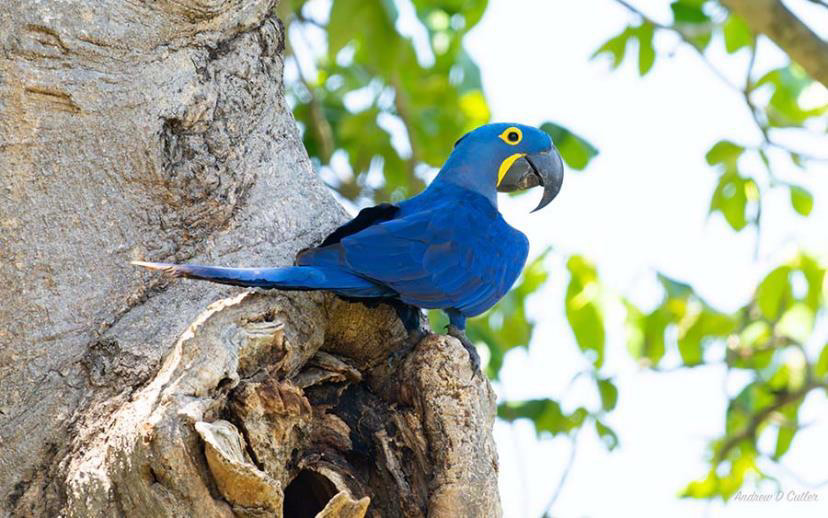
The striking Hyacinth Macaw is one of the most wanted species in the Pantanal (photo Andrew Cutler).
This carefully designed tour is the result of over a decade of personal experience guiding this destination. Thankfully, this year’s tour played out well for the participants, who were excited from beginning to the end. We enjoyed brilliant encounters with iconic species such as Sunbittern, Red-legged Seriema, Boat-billed Heron, Zigzag Heron, Greater Rhea, Undulated Tinamou, Toco Toucan, Jabiru, Plumbeous Ibis, Bare-faced Curassow, Red-billed Scythebill, Great Rufous Woodcreeper, Southern Screamer, Roseate Spoonbill, Common and Great Potoos, a nice selection of woodpeckers including Pale-crested Woodpecker and White Woodpecker, and a magical view of Hyacinth Macaw, the largest parrot in the world, to name just a few.
We targeted mammals as well and were able to see Lowland Tapir, Giant Anteater, Giant (River) Otter, and seven different Jaguar individuals during our search along the Cuiabá River. A brief encounter with a pair of Lesser Grison was particularly exciting – I have only seen them three times in over 20 years of traveling in the Neotropics, and this sighting was a mammal lifer for Birding Ecotours as a company.
We did an extension to Iguazu National Park in adjacent northeast Argentina, to visit the Iguazu Falls, one of the seven natural wonders of the world, and to look for the Endangered Black-fronted Piping Guan, which we saw remarkably well. We also saw other great birds such as Blond-crested Woodpecker, Blackish Rail, Surucua Trogon, and Great Dusky Swift adding some Atlantic Forest species to our list.
Detailed Report
Day 1, 12th October 2025. Arrival into Cuiabá and transfer to the hotel
Almost all tour participants had arrived in Cuiabá the day before, to have time to recover from a long flight. Today was a relaxed day, allowing for a late start after a good rest, time to get to know one another, and some last-minute shopping before the tour began.
This evening we had our first group dinner, at a classic Brazilian buffet in a famous restaurant near the airport. We enjoyed Brazilian steaks and a great selection of salads and vegetarian pastas, which was a great start to the tour. We returned to the hotel full of excitement for tomorrow.
Day 2, 13th October 2025. Transfer to the Pantanal Pouso Alegre Lodge
After an early breakfast we left the hotel and drove to Poconé. The long‑anticipated day had arrived: we were finally visiting the Pantanal!
We made our first stop next to a small seasonal roadside wetland and here we had several White-faced Whistling Ducks together with Black-bellied Whistling Ducks and a couple of Brazilian Teals. We saw our first Southern Lapwing, Large-billed Tern, Black-necked Stilt, Picazuro Pigeon, Guira Cuckoo, Smooth-billed Ani, Buff-necked Ibis, Striated Heron, Rufous Hornero (the national bird of Argentina), Brown-chested Martin, Great Kiskadee, Sayaca Tanager, Orange-winged Amazon and the uncommon Golden-collared Macaw. All tour participants were ecstatic!
We continued driving and the next stop delighted us with the handsome Blue-and-yellow Macaw, which was a lifer for almost all tour participants. As if this was not enough, our next sighting was a group of Greater Rheas. This was the first of many groups and we had almost daily encounters with South America’s tallest bird.
Other birds we saw this morning included Chaco Chachalaca, Picui Ground Dove, Grey-cowled Wood Rail, Limpkin, Green Ibis, Wood Stork, Roseate Spoonbill, Rufescent Tiger Heron, Black-crowned Night-Heron, Capped Heron, Cocoi Heron, Striated Heron, Snowy and Great Egrets, Amazon Kingfisher, Savanna Hawk,Cattle Tyrant, White-headed Marsh Tyrant, Black-backed Water Tyrant, Grey-breasted Martin, Crested Caracara and Toco Toucan.
At the entrance of the famous Transpantaneira we saw our first Yacare Caiman, one of the icons of the Pantanal, and the impressive Jabiru, which is common in the Pantanal.
We arrived at Pouso Alegre Lodge for lunch and spent the afternoon birding around the dry woodlands, adding Squirrel Cuckoo, Bare-faced Curassow, White-throated Piping-Guan, Chaco Chachalaca, Narrow-billed Woodcreeper, Common Tody-Flycatcher, Rufous-bellied Thrush, Fork-tailed Flycatcher, Yellow-billed Cardinal, Solitary Black Cacique, Scaled Dove, Pale-vented Pigeon, Plumbeous Ibis, Whistling Heron, Chestnut-eared Aracari, Little Woodpecker, Monk Parakeet, Red-crested Cardinal, and Thrush-like Wren.
We took a 4×4 safari drive to facilitate travel further inland. Even though bird activity was low we saw some interesting species such as the impressive Red-billed Scythebill, the endemic Chestnut-bellied Guan, Masked Tityra, Turquoise-fronted Amazon, Yellow-chevroned Parakeet, our first Common Potoo at a daytime roost, and one of the main targets for everyone, the striking Hyacinth Macaw.
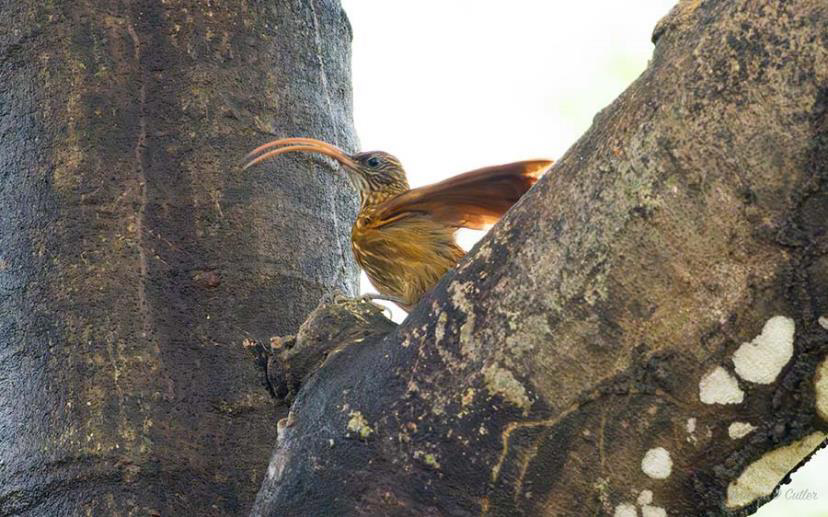
The amazing Red-billed Scythebill was a highlight of our tour (photo Andrew Cutler).
In the evening we did our first safari style night drive. We found Common Potoo, were amazed by the amount of eyeshine produced by Yacaré Caiman and had our first and only Brazilian Tapir of the whole trip.
Day 3, 14th October 2025. Pantanal Pouso Alegre Lodge
We had another morning to explore the woodlands of Pouso Alegre and added some good species, including several of the birds we had seen the previous day. We met at the lodge feeders before breakfast and saw Purplish Jay, Baying Cowbird, Scaled Dove, Picui Ground Dove, Picazuro Pigeon, Saffron Finch, Red-crested and Yellow-billed Cardinals, Bare-faced Curassow, Chestnut-bellied Guan and Chaco Chachalaca.
Later we explored a trail across the woodlands and added Black-fronted Nunbird, Ferruginous Pygmy Owl, Turquoise-fronted Amazon, Silver-beaked Tanager, and Buff-throated Woodcreeper. Suddenly we heard an Undulated Tinamou. With some careful positioning, we enjoyed excellent views just a few feet away, and notably not at a feeder. We witnessed the bird calling, displaying and remaining unaware of our presence for a long time, even when we eventually decided to leave. Another great addition was a handsome Pale-crested Woodpecker, then a Great Potoo at its daytime roost left everybody thrilled, and we concluded the hike with awesome views of a Great Rufous Woodcreeper.
But remember, the Pantanal is not only full of birds, it also teems with other wildlife. During this walk we managed to see a couple of nice species of primates such as Black-tailed Marmosets and Tufted Capuchin as well as Azara’s Agouti and South American Coati.
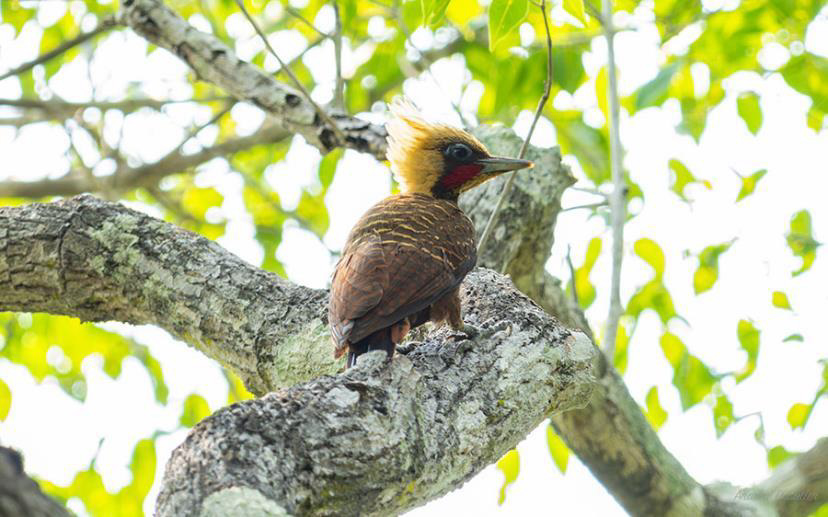
One of the most handsome woodpeckers found in the Pantanal, Pale-crested Woodpecker (photo Andrew Cutler).
After our morning walk, we ate lunch and took a break. Later we did some easy birding around the lodge woodlands, giving us time for photos of the area’s common species. We added brief views of Orange-backed Troupial, Great Black Hawk, Black-collared Hawk, and more Greater Rheas, amongst others. In the evening we had a glimpse of Crab-eating Fox. We also looked for the elusive Ocelot, but did not see the individual who had regularly been coming close to the lodge to feed on bait placed by the lodge staff.
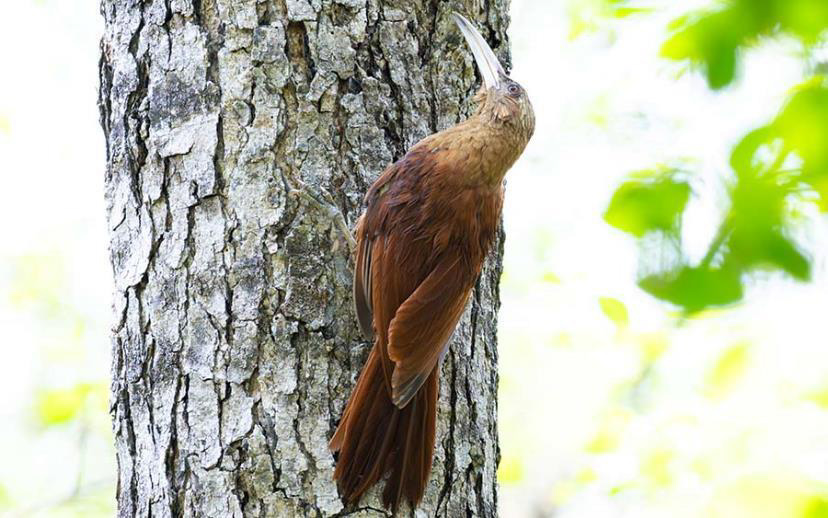
An exciting Great Rufous Woodcreeper in dry woodlands of the Pantanal (photo Andrew Cutler).
Day 4, 15th October 2025. Pantanal Transfer to Mato Grosso Lodge
Today we left Pouso Alegre and we continued driving along the Transpantaneira road towards the Pixaim area. Along this drive we and we found many of the area’s common and widespread species such as Greater Rhea, Chaco Chachalaca, Brazilian Teal, Picazuro Pigeon, Guira Cuckoo, Grey-cowled Wood Rail, Jabiru, Green Ibis, Rufescent Tiger Heron, Great Black-Hawk, Roadside Hawk, Monk Parakeet, Great Kiskadee, Brown-chested and Grey-breasted Martins, Orange-backed Troupial and Solitary Sandpiper. This drive also yielded Marsh Deer and more Yacare Caimans.
When we arrived at Mato Grosso Lodge we checked the bird feeders and found Yellow-billed Cardinal, Purplish Jay, Ruddy Ground Dove and Greyish Baywing, and around 3.30 pm took boats to explore the Pixaim water system. The Pixaim area is more humid and lusher than the Poconé area, and the birdlife includes some species found not found around Pouso Alegre or Piuval Lodge. The breeze during the boat trip was cool and very pleasant. This boat trip added some great birds such as Lesser Kiskadee, Pale-legged Hornero, Rusty-backed Spinetail, American Pygmy Kingfisher, Black-fronted Nunbird, Striated Heron, Rufous Cachalote, Yellow-billed Cardinal, Piratic Flycatcher, Turquoise-fronted Amazon, Sunbittern, White-throated Piping Guan, Pale-vented Pigeon, Greater Ani, Wood Stork, Amazon and Ringed Kingfishers, Crested Caracara, Bare-faced Ibis and a couple of Anhingas. At dusk we tried for the secretive Zigzag Heron, which provided satisfactory views after a lot of work to get the best angle from the boat for everyone. Aided by the skilled boat drivers, we managed to see a couple of motionless birds that were hiding and calling from a bush. We had very good views of several Band-tailed Nighthawks and, during the drive back to the lodge, a single Nacunda Nighthawk flying above the river.
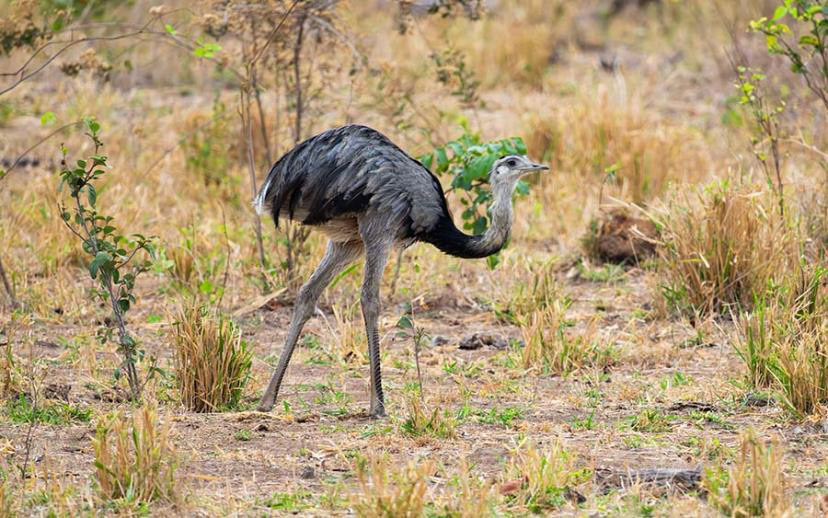
Massive Greater Rheas were a regular feature of the grasslands and open areas of the Pantanal (photo Andrew Cutler).
Day 5, 16th October 2025. Transfer to Porto Joffre and Jaguar boat trip
We met at dawn to explore the grounds of the lodge and had great views of some open habitat birds as well as gallery forest species. We started with great views of Nanday Parakeet, also known as Black-headed Conure in older literature. We had fantastic views of several other parrots such as Peach-fronted Parakeet, Yellow-chevroned Parakeet, Turquoise-fronted Amazon, White-eyed Parakeet, and Monk Parakeet, all taking part in their early morning social gatherings or flying above the lodge grounds.
In the vicinity of the lodge we managed to see Greater Thornbird, Chotoy Spinetail, Yellow-bellied Elaenia, Rufous Cacholote, a single male White-bellied Seedeater, Masked Gnatcatcher, Bluish-grey Saltator, our first Glittering-throated Hummingbird, Savanna Hawk, White-tipped Dove, and some species we encountered daily, like Plumbeous Ibis, Buff-necked Ibis, Black-collared Hawk, Grey-cowled Wood Rail, Chaco Chachalaca, and Rufous Hornero.
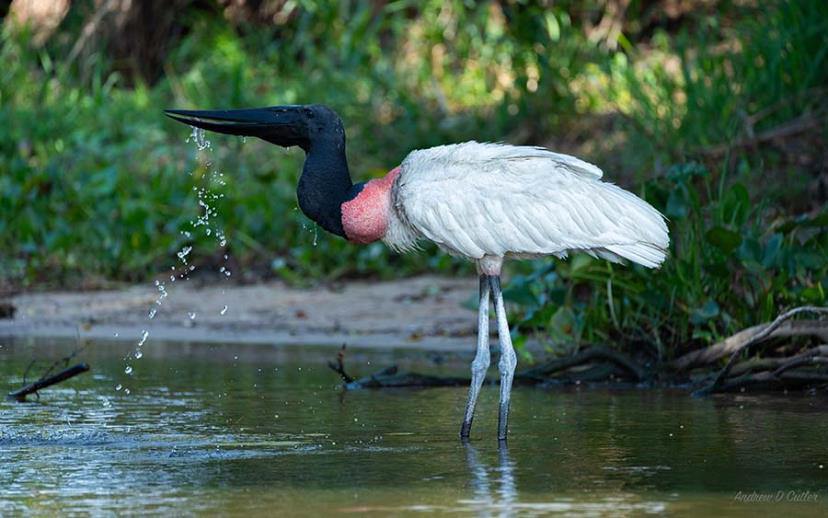
Jabiru is one of the largest birds in the Pantanal (photo Andrew Cutler).
We checked the gallery forest adjacent to the Pixaim River and had good views of more secretive species like Mato Grosso Antbird and White-lored Spinetail, both seen very well by all participants.
We left the lodge and transferred to our next lodge, located near Porto Joffre, at the end of the Transpantaneira. On the drive we added Capped Heron, Unicolored Blackbird, Yellow-rumped Cacique, Snail Kite, Muscovy Duck and Southern Screamer. We also enjoyed repeat sightings of Fork-tailed Flycatcher, Brown-chested Martin, Cattle Tyrant, Great Kiskadee and White-headed Marsh Tyrant.
We arrived at the lodge and, after checking in, had a lovely view of Hyacinth Macaw near a nest box, and a couple of Toco Toucans. We enjoyed a very tasty lunch, probably the best in the whole Pantanal, in our comfortable Santa Rosa Lodge. This is the only lodge in the whole Pantanal which has its own ice cream machine (according to our driver).
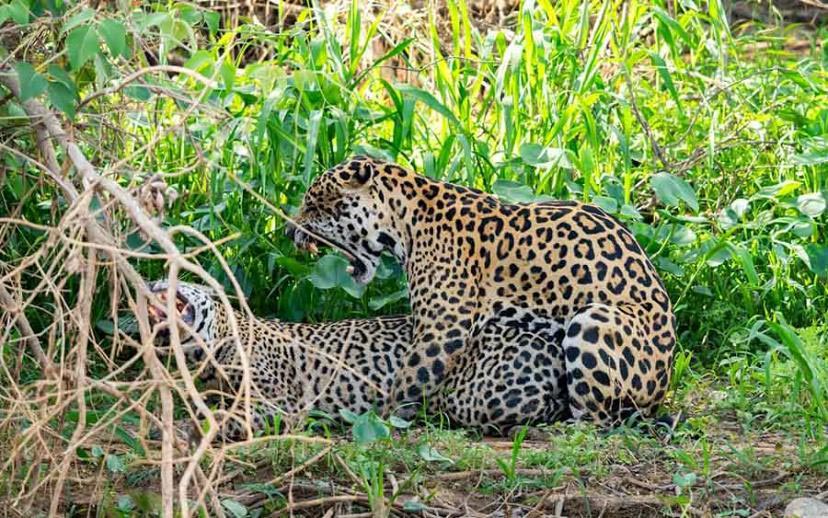
A pair of Jaguars mating in the Pantanal – seldom captured on camera (photo Andrew Cutler).
Next, we explored the Cuiabá River and its tributaries by boat, searching for our main target: the Jaguar. Soon we witnessed a full display of courtship and mating by a pair of these fantastic animals. I have toured the Pantanal almost every year for the past twelve years and even though I have seen predation events and mothers with cubs, I had never seen this behavior before. Springtime had arrived, and “love was in the air”!
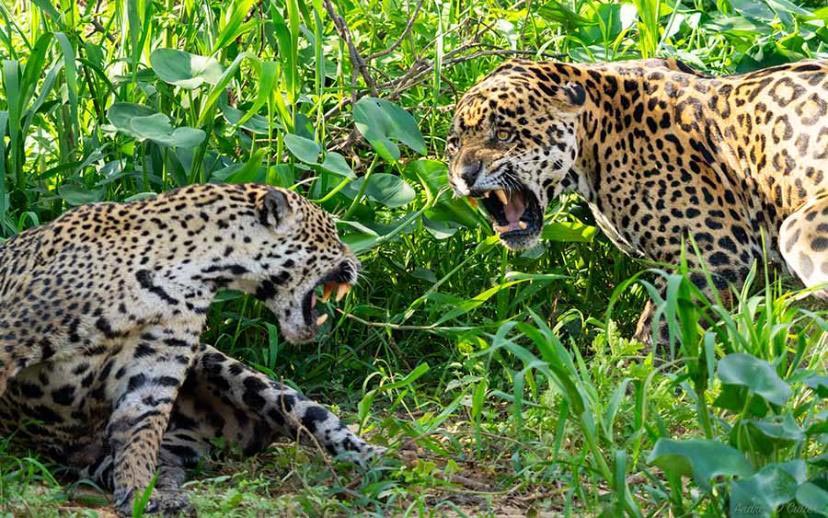
We couldn’t have asked for better views and interactions of Jaguars (photo Andrew Cutler).
We spent another few hours along the river and recorded two more Jaguars, including an old adult with a radio collar. During the river trip we saw Southern Screamer, Black Skimmer, Bare-faced Curassow, Greater Ani, Yellow-billed Tern, Large-billed Tern, Ringed Kingfisher, Lineated Woodpecker, White-winged Swallow, Solitary Black Cacique, and some participants managed to see Cobalt-rumped Parrotlet flying by. Near the end of the day we had great views of Pied Plover (known as Pied Lapwing in older literature) along the Cuiabá River shoreline. We then returned to the lodge to celebrate a great day.
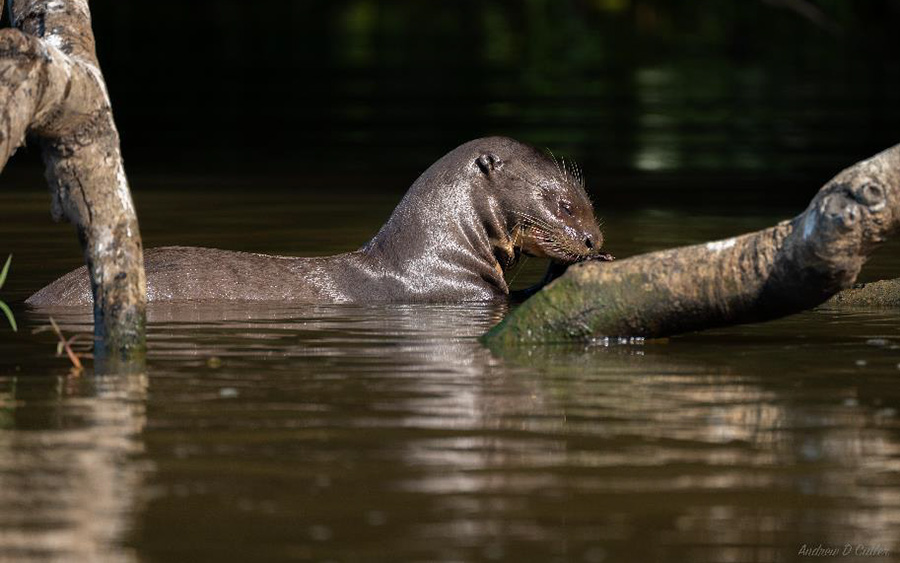
Giant (River) Otter, another incredible creature that was seen well on our Pantanal tour (photo Andrew Cutler).
Day 6, 17th October 2025. Jaguar boat trip and exploring the Pantanal
We spent the morning exploring the river and had fantastic views of a female Jaguar with her two fully grown, two-year-old, offspring. Again, such an interesting behavior to see. We had seven different encounters with Jaguars. The morning’s target was Giant (River)Otter, and we were lucky to encounter a single family, but only once during our whole stay in the Pantanal. It is always wonderful to see this creature, the largest otter in the world, fishing and eating at an easy pace.
After our incredible Jaguar encounters, we decided to skip the afternoon boat trip and explore the Transpantaneira instead. It was quite hot and bird activity did not take off until late in the afternoon, around 5 pm, with sunset at 6 pm. There were not many new birds, but we managed to get good views of shy Cinereous-breasted Spinetail, and we had great views through the scope of Striped Cuckoo. Other birds included male and female Unicolored Blackbird, Black-backed Water Tyrant, Yellow-bellied Elaenia, Yellow-chinned Spinetail, Grey-breasted Martin, Solitary Black Cacique, Black-crowned Night Heron, Roseate Spoonbill, Solitary Sandpiper, White-throated Piping Guan and a single Undulated Tinamou flying by.
Day 7, 18th October 2025.Pantanal and transfer to Piuval Lodge
Today was a long drive back to Poconé along the Transpantaneira, enjoying the usual birds as we went. We added very few species, but did see the main target for that morning, the handsome Scarlet-headed Blackbird, which we managed good scope views. Other new birds for the day included White-wedged Piculet, Short-crested Flycatcher, Rusty-collared Seedeater and White Woodpecker. We had superb views of Hyacinth Macaw, Toco Toucan and Lesser Yellow-headed Vulture. We returned to Mato Grosso Lodge for lunch and had a funny and unusual sighting with a Ferruginous Pygmy Owl sitting on a fire extinguisher during daytime.
The rain hit hard while we were enjoying our lunch, and then we drove back to Poconé, where we would stay at Piuval Lodge for two nights. I was super excited when I saw a pair of Lesser Grison (a type of mustelid) one of the least encountered mammals in the Neotropics, and the participants were able to catch a glimpse too.
We jumped into our 4×4 safari vehicle to explore the deciduous woodlands between Piuval Lodge and the Bento Gomez River, searching for birds and other wildlife. There are a few birds that are hard to see in the more humid and flooded areas of the Pantanal, such as the Campo Flicker, which provided great views for everyone. We had several Greater Rheas, Narrow-billed Woodcreeper, Crested Oropendola, Toco Toucan, Buff-necked and Plumbeous Ibis, Picui Ground Dove, Scaled Dove, Bare-faced Curassow and more. A moment of collective hysteria came when we saw a pair of Sunbittern building a nest! Just when the group was calming down, we had a Red-legged Seriema crossing the road in front of us and coming so close to the vehicle that binoculars were not necessary. This was a target for everyone in the group. A night drive didn’t provide much, except for a pair of Crab-eating Foxes, a Parauque and dozens of Yacare Caimans’ eyeshine coming from the ponds of water.
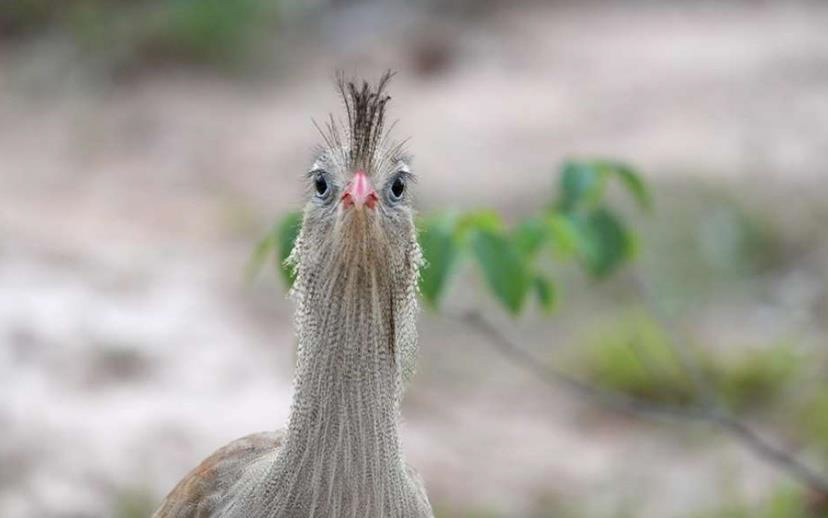
Red-legged Seriema was seen in the dry habitats of the Pantanal (photo Andrew Cutler).
Day 8, 19th October 2025. Piuval Lodge
We met before dawn at the lodge entrance for our safari drive, to look for our main target in this area, the most-wanted Giant Anteater. Not long into our drive through the Brazilian grasslands around Piuval Lodge, we encountered our first individual, moving away from another vehicle and heading straight toward us.
After a couple of hours’ exploring on the way back to the lodge, I spotted another individual taking a dust bath in the middle of the track. It was especially memorable that we had excellent views of four of Brazil’s “Big Five” mammals: Jaguar, Brazilian Tapir, Giant Anteater, and Giant (River) Otter. (Hopefully we will return to Brazil to explore the central savannas to look for Maned Wolf (the last of the “Big Five” and the scarce Brazilian Merganser.)
We went to explore the grasslands and dry woodlands in the afternoon and found birds such as Chestnut-bellied Guan, Campo Flicker, Rufous Casiornis, Black-fronted Nunbird, Great Horned Owl, Guira Cuckoo, Black-collared Hawk, Southern Screamer, White-tipped Dove, Jabiru, Mouse-colored Tyrannulet, Crested Oropendola, and many more.
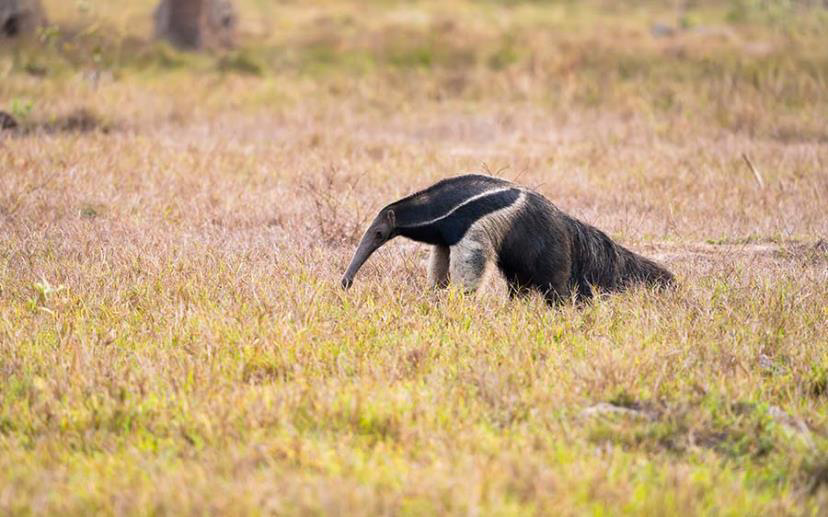
The bizarre Giant Anteater was a main target near Piuval Lodge (photo Andrew Cutler).
Day 9, 20th October 2025. Piuval Lodge and flight to São Paulo
Today we had our last exploring around the lodge woodlands. We started the morning checking a pond next to the entrance, where we had good views of White-rumped Sandpiper, Large-billed Tern, Roseate Spoonbill, and White-rumped Monjita. Some other tour members had a couple of encounters with Grey Monjita, which is often seen in this area but is not common. During the drive we had Burrowing Owl, Chopi Blackbird, Monk and White-eyed Parakeets, Whistling Heron, Plumbeous and Buff-necked Ibises and more. We heard Blue-crowned Trogon, and we spent some time trying for the shy Flavescent Warbler, which provided good views after some effort. We had a pair of Bat Falcons mating, and I had a glimpse of a Jaguarundi, a widespread but shy cat, which vanished into the bushes before the group could see it well or at all.
Our time in the Pantanal came to an end and, after lunch, we headed to Cuiabá airport for our flight to São Paulo. We arrived in São Paulo, which is an hour ahead of Cuiabá, and it was already late by the time we reached our hotel. Tomorrow was going to be a very early start, so everyone retired to their rooms for a good night’s sleep.
Day 10, 21st October 2025. Flight to Foz de Iguazu and transfer to Misiones Argentina
We flew to Foz de Iguazu and were met by our local team, who transferred us to the state of Misiones in adjacent Argentina. Crossing the border was relatively easy and quick and we were soon in Puerto Iguazú. Our destination was the famous hummingbird garden owned by Leandro. Sadly, this is not the best time of the year to see the high diversity of species that is possible during the austral winter, and we only had a few sightings of Violet-capped Woodnymph, Gilded Hummingbird and Black-throated Mango. We thoroughly enjoyed these sightings which gave us the opportunity to study the features of each species, without being overwhelmed. We had encounters with Sayaca Tanager, Saffron Finch, Bananaquit, Cattle Tyrant, Southern House Wren, Eared Dove and Boat-billed Flycatcher. We then transferred to our hotel in the 600 Hectares Municipal Reserve which was to be our base for the following nights.
In the afternoon we birded the surrounds of our lodge, finding the striking Green-headed Tanager, Pale-vented Pigeon, Grey-rumped Swift, Wattled Jacana, Plumbeous Kite, Barred Antshrike, Streaked Flycatcher, Black-tailed Tityra, Southern Rough-winged Swallow, Thrush-like Wren, Blue Dacnis, Red Pileated Finch and Variegated Flycatcher. We also enjoyed a Common Potoo roosting at our hotel.
Day 11, 22nd October 2025. Visit to the Iguazu Falls (Argentinean side)
Today we went to explore the Iguazu National Park on the Argentinean side. Our plan was to bird the surrounds and then go and admire the majestic Devil’s Throat, with the iconic view of the waterfall immortalized in Roland Joffé’s 1986 film “The Mission”.
Thanks to our local contacts we were allowed into the park before the crowds, which helped us to enjoy some birds next to the entrance. Perhaps the best sight was a Toco Toucan having a fight with Plush-crested Jays, Chopi Blackbirds, and Red-rumped Caciques. Participants were able to admire the birds very closely. It was a great and fun day, and we added birds to our Argentinean list, with other sightings including Chalk-browed Mockingbird, Thrush-like Wren, Pale-breasted Thrush, Giant Cowbird, White-winged Swallow, Rufous Hornero, Fork-tailed Flycatcher, Yellow-bellied Elaenia, Plumbeous Kite, Squirrel Cuckoo, Neotropic Cormorant, Greater Ani, and Turkey Vulture.
The waterfalls were carrying a lot of water, and it was difficult to get to the Devil’s Throat viewpoint without being completely drenched with water. Iguazu is the largest waterfall system in the world, carrying an average volume of 61,700 cubic feet per second (1,750 cubic meters per second) of water and has been part of the UNESCO World Heritage List since 1984. After experiencing this wonder of nature we enjoyed lunch in an Argentinean steak house. Then we explored some trails along the lowest parts of the falls. Here we heard Spot-backed Antshrike, which unfortunately didn’t come into the open, but we saw Great Dusky Swift and the Endangered Black-fronted Piping Guan. After a great day we returned to our lodge.
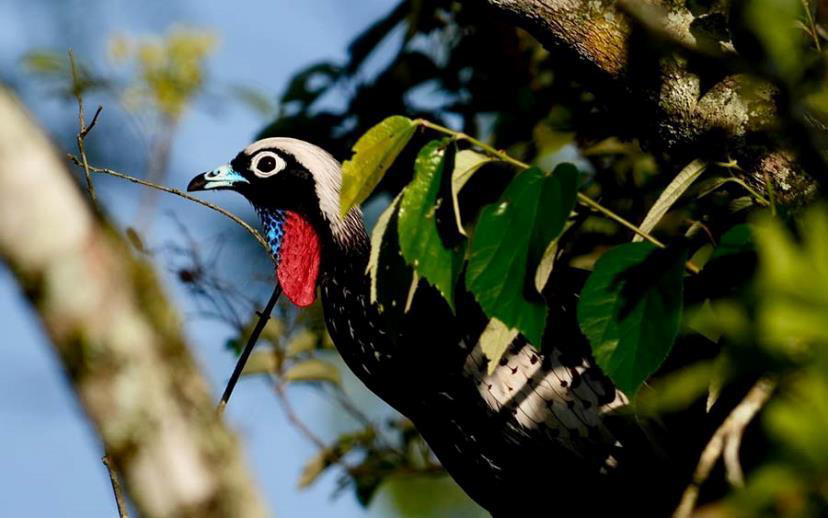
Black-fronted Piping Guan in the Atlantic Forest around Iguazu (photo Andrew Cutler).
Day 12, 23rd October 2025. 600 Hectares Municipal Reserve (Argentina)
Originally, we had planned to explore the Brazilian side of the falls, but we were happy with what we had seen, and we decided to bird nearby instead. It was sunny and hot very early in the morning and, by the time we got to our spot, it was brutally quiet. Our patience was tested as bird activity remained very low. We started at a stakeout where we had had luck with Red-breasted Toucan last year, but it unfortunately didn’t show up. Our first bird was Toco Toucan, followed by Scaly-headed Parrot, Red-rumped Cacique and Swallow Tanager.
We put effort into obtaining views of Blackish Rail and we were rewarded with great views of one bird right out in the open, along the road in front of us. Sadly, the activity did not improve and, with dozens of cicadas calling, there seemed no hope. Despite this, we had good encounters with Rufous-margined Antwren, Streak-capped Antwren, Violaceous Euphonia, Chestnut-vented Conebill, Blue Dacnis, Green-winged Saltator, Swallow Tanager, and Black-goggled Tanager (a female). We tried hard for Rufous-capped Motmot, but it remained heard only, except for a glimpse by myself and just one participant.
Day 13, 24th October 2025. Urugua-í Bird Reserve (Argentina)
We left the hotel before dawn to drive to the Urugua-í Reserve, located over an hour away. We arrived at the reserve and spent the morning birding. There was not much flock activity, but we had two encounters with the Endangered Black-fronted Piping Guan, followed by Lineated Woodpecker, Tropical Parula, Golden-crowned Warbler, Chestnut-crowned Becard, White-necked Thrush, Variable Antshrike, White-winged Becard, Eared Pygmy-Tyrant, Ruby-crowned Tanager, White-browed Warbler and Crested Becard. There were also several birds already seen in the Pantanal but new for our Argentina list, including Guira Cuckoo, Green Ibis, and others. Blackish-blue Seedeater, Buff-browed Foliage-gleaner, and White-shouldered Fire-eye remained heard only. One participant only had a view of Rufous Gnateater. In the sunny and quiet conditions we followed the call of Surucua Trogon along the forest until we found a calling male, to everyone’s enjoyment.
On the drive back to Puerto Iguazú we stopped at our classic stakeout for the localized Araucaria Tit-Spinetail which we allsaw. In the evening we encountered Tropical Screech Owl outside the hotel.
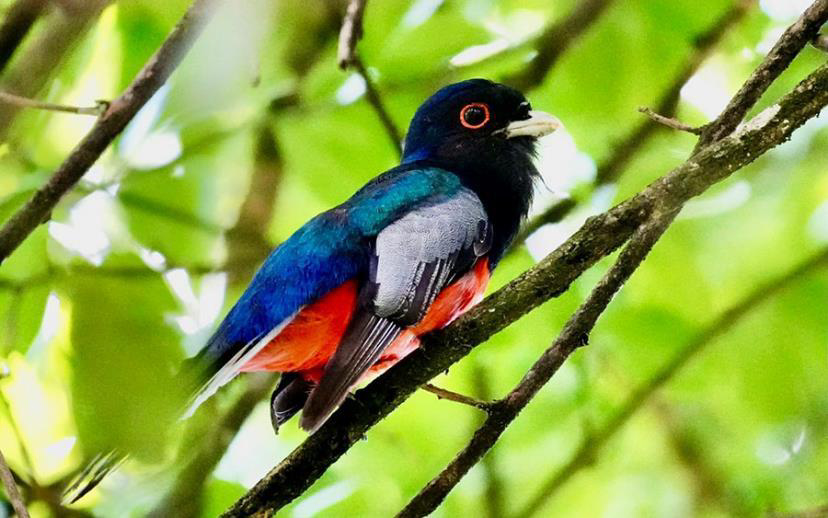
Surucua Trogon was a great sighting (photo Andrew Cutler).
Day 14, 25th October 2025. Transfer to Foz de Iguazu and flight back to São Paulo
We met in the hotel gardens before breakfast to spend an hour birding. Here, we had great views of a male Blond-crested Woodpecker. Another great sighting was a male Dark-billed Cuckoo performing a mating display, sitting on top of the female while both birds held the same caterpillar in their bills. When the male had finished the ritual, he flew away and the female ate the caterpillar. We were incredibly fortunate to witness this.
It is worth mentioning that the Iguazu National Park in the state of Misiones boasts a list of over 800 butterfly species, making it a mega hotspot for butterfly aficionados. During the hottest hours of the day a couple of the tour participants photographed and identified an assortment of butterflies.
We crossed the border back into Brazil and flew to São Paulo. Some participants stayed overnight in São Paulo, while others remained at the airport for several hours to connect with evening flights back home.
This trip through the Pantanal and Iguazu Falls was highly successful, offering participants memorable encounters with birds, mammals, and spectacular landscapes. The itinerary balanced wildlife observation with time to enjoy the region’s atmosphere, and the group appreciated the variety of experiences throughout.
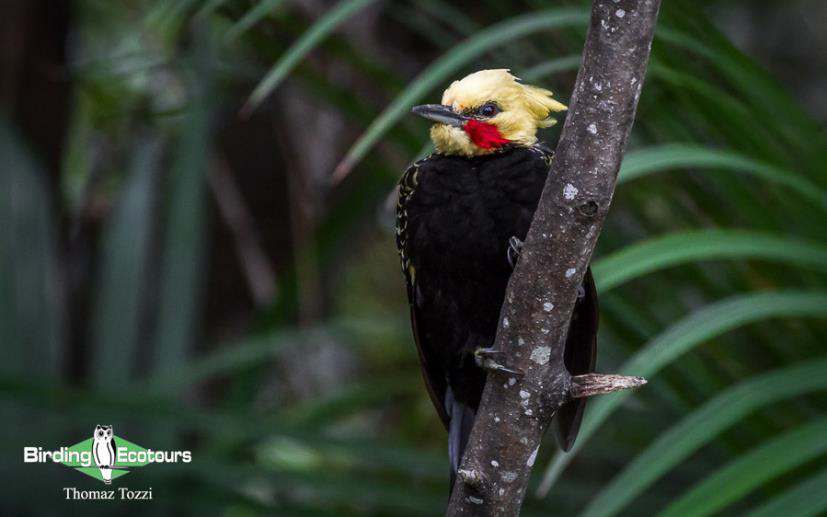
This male Blond-crested Woodpecker showed very well around our lodge in Misiones.
Bird List – Following IOC (15.1) (March 2025)
Birds ‘heard only’ are marked with (H) after the common name, all other species were seen.
The following notation after species names is used to show conservation status following BirdLife International: EN = Endangered.
| Common Name | Scientific Name |
| Rheas (Rheidae) | |
| Greater Rhea | Rhea americana |
| Tinamous (Tinamidae) | |
| Undulated Tinamou | Crypturellus undulatus |
| Brown Tinamou | Crypturellus obsoletus |
| Screamers (Anhimidae) | |
| Southern Screamer | Chauna torquata |
| Ducks, Geese, Swans (Anatidae) | |
| White-faced Whistling Duck | Dendrocygna viduata |
| Black-bellied Whistling Duck | Dendrocygna autumnalis |
| Muscovy Duck | Cairina moschata |
| Brazilian Teal | Amazonetta brasiliensis |
| Chachalacas, Curassows, Guans (Cracidae) | |
| Chaco Chachalaca | Ortalis canicollis |
| Chestnut-bellied Guan | Penelope ochrogaster |
| Black-fronted Piping Guan – EN | Pipile jacutinga |
| White-throated Piping Guan | Pipile grayi |
| Bare-faced Curassow | Crax fasciolata |
| Nightjars (Caprimulgidae) | |
| Nacunda Nighthawk | Chordeiles nacunda |
| Short-tailed Nighthawk (H) | Lurocalis semitorquatus |
| Band-tailed Nighthawk | Nyctiprogne leucopyga |
| Parauque | Nyctidromus albicollis |
| Potoos (Nyctibiidae) | |
| Common Potoo | Nyctibius griseus |
| Great Potoo | Nyctibius grandis |
| Swifts (Apodidae) | |
| Great Dusky Swift | Cypseloides senex |
| White-collared Swift | Streptoprocne zonaris |
| Grey-rumped Swift | Chaetura cinereiventris |
| Hummingbirds (Trochilidae) | |
| Glittering-throated Emerald | Chionomesa fimbriata |
| Black-throated Mango | Anthracothorax nigricollis |
| Violet-capped Woodnymph | Thalurania glaucopis |
| Gilded Hummingbird | Hylocharis chrysura |
| Cuckoos (Cuculidae) | |
| Guira Cuckoo | Guira guira |
| Greater Ani | Crotophaga major |
| Smooth-billed Ani | Crotophaga ani |
| Striped Cuckoo | Tapera naevia |
| Squirrel Cuckoo | Piaya cayana |
| Dark-billed Cuckoo | Coccyzus melacoryphus |
| Pigeons, Doves (Columbidae) | |
| Rock Dove [Feral Pigeon] | Columba livia |
| Picazuro Pigeon | Patagioenas picazuro |
| Pale-vented Pigeon | Patagioenas cayennensis |
| Scaled Dove | Columbina squammata |
| Ruddy Ground Dove | Columbina talpacoti |
| Picui Ground Dove | Columbina picui |
| Eared Dove | Zenaida auriculata |
| Rails, Crakes & Coots (Rallidae) | |
| Blackish Rail | Pardirallus nigricans |
| Grey-cowled Wood Rail | Aramides cajaneus |
| Limpkin (Aramidae) | |
| Limpkin | Aramus guarauna |
| Stilt, Avocet (Recurvirostridae) | |
| Black-necked Stilt | Himantopus mexicanus |
| Plovers (Charadriidae) | |
| Southern Lapwing | Vanellus chilensis |
| Collared Plover | Anarhynchus collaris |
| Jacanas (Jacanidae) | |
| Wattled Jacana | Jacana jacana |
| Sandpipers, Snipes (Scolopacidae) | |
| White-rumped Sandpiper | Calidris fuscicollis |
| Solitary Sandpiper | Tringa solitaria |
| Greater Yellowlegs | Tringa melanoleuca |
| Lesser Yellowlegs | Tringa flavipes |
| Gulls, Terns, Skimmers (Laridae) | |
| Black Skimmer | Rynchops niger |
| Yellow-billed Tern | Sternula superciliaris |
| Large-billed Tern | Phaetusa simplex |
| Sunbittern (Eurypygidae) | |
| Sunbittern | Eurypyga helias |
| Stork (Ciconiidae) | |
| Jabiru | Jabiru mycteria |
| Wood Stork | Mycteria americana |
| Anhingas, Darters (Anhingidae) | |
| Anhinga | Anhinga anhinga |
| Cormorant, Shags (Phalacrocoracidae) | |
| Neotropic Cormorant | Nannopterum brasilianum |
| Ibises, Spoonbills (Threskiornithidae) | |
| Green Ibis | Mesembrinibis cayennensis |
| Buff-necked Ibis | Theristicus caudatus |
| Plumbeous Ibis | Theristicus caerulescens |
| Bare-faced Ibis | Phimosus infuscatus |
| Roseate Spoonbill | Platalea ajaja |
| Herons, Bitterns (Ardeidae) | |
| Rufescent Tiger Heron | Tigrisoma lineatum |
| Boat-billed Heron | Cochlearius cochlearius |
| Zigzag Heron | Zebrilus undulatus |
| Black-crowned Night Heron | Nycticorax nycticorax |
| Capped Heron | Pilherodius pileatus |
| Whistling Heron | Syrigma sibilatrix |
| Snowy Egret | Egretta thula |
| Striated Heron | Butorides striata |
| Great Egret | Ardea alba |
| Western Cattle Egret | Ardea ibis |
| Cocoi Heron | Ardea cocoi |
| New World Vultures (Cathartidae) | |
| Black Vulture | Coragyps atratus |
| Turkey Vulture | Cathartes aura |
| Lesser Yellow-headed Vulture | Cathartes burrovianus |
| Ospreys (Pandionidae) | |
| Osprey | Pandion haliaetus |
| Kites, Hawks, Eagles (Accipitridae) | |
| Plumbeous Kite | Ictinia plumbea |
| Black-collared Hawk | Busarellus nigricollis |
| Snail Kite | Rostrhamus sociabilis |
| Savanna Hawk | Buteogallus meridionalis |
| Great Black Hawk | Buteogallus urubitinga |
| Roadside Hawk | Rupornis magnirostris |
| Owls (Strigidae) | |
| Burrowing Owl | Athene cunicularia |
| Ferruginous Pygmy Owl | Glaucidium brasilianum |
| Great Horned Owl | Bubo virginianus |
| Tropical Screech Owl | Megascops choliba |
| Trogons (Trogonidae) | |
| Surucua Trogon | Trogon surrucura |
| Blue-crowned Trogon (H) | Trogon curucui |
| Kingfishers (Alcedinidae) | |
| Amazon Kingfisher | Chloroceryle amazona |
| American Pygmy Kingfisher | Chloroceryle aenea |
| Green Kingfisher | Chloroceryle americana |
| Ringed Kingfisher | Megaceryle torquata |
| Motmots (Momotidae) | |
| Rufous-capped Motmot | Baryphthengus ruficapillus |
| Puffbirds (Bucconidae) | |
| Black-fronted Nunbird | Monasa nigrifrons |
| Toucans (Ramphastidae) | |
| Toco Toucan | Ramphastos toco |
| Chestnut-eared Aracari | Pteroglossus castanotis |
| Woodpeckers (Picidae) | |
| White-wedged Piculet | Picumnus albosquamatus |
| White Woodpecker | Melanerpes candidus |
| Little Woodpecker | Veniliornis passerinus |
| Campo Flicker | Colaptes campestris |
| Pale-crested Woodpecker | Celeus lugubris |
| Blond-crested Woodpecker | Celeus flavescens |
| Lineated Woodpecker | Dryocopus lineatus |
| Seriemas (Cariamidae) | |
| Red-legged Seriema | Cariama cristata |
| Caracaras, Falcons (Falconidae) | |
| Crested Caracara | Caracara plancus |
| Yellow-headed Caracara | Milvago chimachima |
| Laughing Falcon | Herpetotheres cachinnans |
| Collared Forest Falcon (H) | Micrastur semitorquatus |
| Bat Falcon | Falco rufigularis |
| African & New World Parrots (Psittacidae) | |
| Monk Parakeet | Myiopsitta monachus |
| Yellow-chevroned Parakeet | Brotogeris chiriri |
| Scaly-headed Parrot | Pionus maximiliani |
| Orange-winged Amazon | Amazona amazonica |
| Turquoise-fronted Amazon | Amazona aestiva |
| Cobalt-rumped Parrotlet | Forpus xanthopterygius |
| Nanday Parakeet | Aratinga nenday |
| Hyacinth Macaw | Anodorhynchus hyacinthinus |
| Peach-fronted Parakeet | Eupsittula aurea |
| Blue-and-yellow Macaw | Ara ararauna |
| Golden-collared Macaw | Primolius auricollis |
| White-eyed Parakeet | Psittacara leucophthalmus |
| Ovenbirds (Furnariidae) | |
| Great Rufous Woodcreeper | Xiphocolaptes major |
| Buff-throated Woodcreeper | Xiphorhynchus guttatus |
| Red-billed Scythebill | Campylorhamphus trochilirostris |
| Narrow-billed Woodcreeper | Lepidocolaptes angustirostris |
| Pale-legged Hornero | Furnarius leucopus |
| Rufous Hornero | Furnarius rufus |
| Araucaria Tit- Spinetail | Leptasthenura setaria |
| Greater Thornbird | Phacellodomus ruber |
| Rusty-backed Spinetail | Cranioleuca vulpina |
| Grey-crested Cacholote | Pseudoseisura unirufa |
| Yellow-chinned Spinetail | Certhiaxis cinnamomeus |
| Chotoy Spinetail | Schoeniophylax phryganophilus |
| White-lored Spinetail | Synallaxis albilora |
| Cinereous-breasted Spinetail | Synallaxis hypospodia |
| Buff-browed Foliage-gleaner (H) | Syndactyla rufosuperciliata |
| Antbirds (Thamnophilidae) | |
| Rufous-margined Antwren | Herpsilochmus rufimarginatus |
| Rusty-backed Antwren | Formicivora rufa |
| Streak-capped Antwren | Terenura maculata |
| Barred Antshrike | Thamnophilus doliatus |
| Great Antshrike | Taraba major |
| Variable Antshrike | Thamnophilus caerulescens |
| Spot-backed Antshrike (H) | Hypoedaleus guttatus |
| Mato Grosso Antbird | Cercomacra melanaria |
| White-shouldered Fire-eye | Pyriglena leucoptera |
| Gnateaters (Conopophagidae) | |
| Rufous Gnateater | Conopophaga lineata |
| Tyrant Flycatchers, Calyptura (Tyrannidae) | |
| Yellow-bellied Elaenia | Elaenia flavogaster |
| Mouse-colored Tyrannulet | Nesotriccus murinus |
| Eared Pygmy Tyrant | Myiornis auricularis |
| Scarlet Flycatcher | Pyrocephalus rubinus |
| White-rumped Monjita | Xolmis velatus |
| Grey Monjita | Nengetus cinereus |
| Common Tody-Flycatcher | Todirostrum cinereum |
| Pied Water Tyrant | Fluvicola pica |
| Black-backed Water Tyrant | Fluvicola albiventer |
| Long-tailed Tyrant | Colonia colonus |
| Cattle Tyrant | Machetornis rixosa |
| Piratic Flycatcher | Legatus leucophaius |
| Social Flycatcher | Myiozetetes similis |
| Rusty-margined Flycatcher | Myiozetetes cayanensis |
| Great Kiskadee | Pitangus sulphuratus |
| Lesser Kiskadee | Philohydor lictor |
| Streaked Flycatcher | Myiodynastes maculatus |
| Boat-billed Flycatcher | Megarynchus pitangua |
| Variegated Flycatcher | Empidonomus varius |
| Tropical Kingbird | Tyrannus melancholicus |
| Fork-tailed Flycatcher | Tyrannus savana |
| Rufous Casiornis | Casiornis rufus |
| Swainson’s Flycatcher | Myiarchus swainsoni |
| Short-crested Flycatcher | Myiarchus ferox |
| Manakins (Pipridae) | |
| Blue Manakin | Chiroxiphia caudata |
| Tityras, Becards & Allies (Tityridae) | |
| Masked Tityra | Tityra semifasciata |
| Black-tailed Tityra | Tityra cayana |
| White-winged Becard | Pachyramphus polychopterus |
| Crested Becard | Pachyramphus validus |
| Chestnut-crowned Becard | Pachyramphus castaneus |
| Vireos, Greenlets, Shrike-babblers (Vireonidae) | |
| Rufous-browed Peppershrike | Cyclarhis gujanensis |
| Chivi Vireo | Vireo chivi |
| Crows, Jays (Corvidae) | |
| Plush-crested Jay | Cyanocorax chrysops |
| Purplish Jay | Cyanocorax cyanomelas |
| Swallows, Martins (Hirundinidae) | |
| White-rumped Swallow | Tachycineta leucorrhoa |
| White-winged Swallow | Tachycineta albiventer |
| Brown-chested Martin | Progne tapera |
| Grey-breasted Martin | Progne chalybea |
| Southern Rough-winged Swallow | Stelgidopteryx ruficollis |
| Blue-and-white Swallow | Pygochelidon cyanoleuca |
| Barn Swallow | Hirundo rustica |
| Black-capped Donacobius (Donacobiidae) | |
| Black-capped Donacobius | Donacobius atricapilla |
| Wrens (Troglodytidae) | |
| Thrush-like Wren | Campylorhynchus turdinus |
| Southern House Wren | Troglodytes musculus |
| Gnatcatchers (Polioptilidae) | |
| Masked Gnatcatcher | Polioptila dumicola |
| Mockingbirds, Thrashers (Mimidae) | |
| Chalk-browed Mockingbird | Mimus saturninus |
| Thrushes (Turdidae) | |
| Creamy-bellied Thrush | Turdus amaurochalinus |
| White-necked Thrush | Turdus albicollis |
| Pale-breasted Thrush | Turdus leucomelas |
| Rufous-bellied Thrush | Turdus rufiventris |
| Old World Sparrows, (Passeridae) | |
| House Sparrow | Passer domesticus |
| Wagtails, Pipits (Motacillidae) | |
| Yellowish Pipit | Anthus chii |
| Finches, Euphonias (Fringillidae) | |
| Purple-throated Euphonia | Euphonia chlorotica |
| Chestnut-bellied Euphonia | Euphonia pectoralis |
| New World Sparrows (Passerellidae) | |
| Grassland Sparrow | Ammodramus humeralis |
| Rufous-collared Sparrow | Zonotrichia capensis |
| Oropendolas, New World Orioles, Blackbirds (Icteridae) | |
| Solitary Cacique | Cacicus solitarius |
| Red-rumped Cacique | Cacicus haemorrhous |
| Crested Oropendola | Psarocolius decumanus |
| Variable Oriole | Icterus pyrrhopterus |
| Orange-backed Troupial | Icterus croconotus |
| Giant Cowbird | Molothrus oryzivorus |
| Shiny Cowbird | Molothrus bonariensis |
| Scarlet-headed Blackbird | Amblyramphus holosericeus |
| Chopi Blackbird | Gnorimopsar chopi |
| Greyish Baywing | Agelaioides badius |
| Unicolored Blackbird | Agelasticus cyanopus |
| New World Warblers (Parulidae) | |
| Tropical Parula | Setophaga pitiayumi |
| Golden-crowned Warbler | Basileuterus culicivorus |
| Flavescent Warbler | Myiothlypis flaveola |
| White-rimmed Warbler | Myiothlypis leucoblephara |
| Riverbank Warbler | Myiothlypis rivularis |
| Cardinals & Allies (Cardinalidae) | |
| Blackish-blue Seedeater | Amaurospiza moesta |
| Tanagers & Allies (Thraupidae) | |
| Swallow Tanager | Tersina viridis |
| Blue Dacnis | Dacnis cayana |
| Green-winged Saltator | Saltator similis |
| Bluish-grey Saltator | Saltator coerulescens |
| Bananaquit | Coereba flaveola |
| Black-goggled Tanager | Trichothraupis melanops |
| Silver-beaked Tanager | Ramphocelus carbo |
| Red Pileated Finch | Coryphospingus cucullatus |
| White-lined Tanager | Tachyphonus rufus |
| Ruby-crowned Tanager | Tachyphonus coronatus |
| White-bellied Seedeater | Sporophila leucoptera |
| Rusty-collared Seedeater | Sporophila collaris |
| Chestnut-vented Conebill | Conirostrum speciosum |
| Saffron Finch | Sicalis flaveola |
| Magpie Tanager | Cissopis leverianus |
| Red-crested Cardinal | Paroaria coronata |
| Yellow-billed Cardinal | Paroaria capitata |
| Sayaca Tanager | Thraupis sayaca |
| Green-headed Tanager | Tangara seledon |
| Total seen | 235 |
| Total heard only | 5 |
| Total recorded | 240 |
Mammal List – Following Mammalwatching.com (November 2024)
| Common Name | Scientific Name | |
| Anteaters (Myrmecophagidae) | ||
| Giant Anteater | Myrmecophaga tridactyla | |
| Spider, Howler, and Woolly Monkeys (Atelidae) | ||
| Paraguayan Howler | Alouatta caraya | |
| Hooded Capuchin | Sapajus cay | |
| Marmosets (Callitrichidae) | ||
| Black-tailed Marmoset | Mico melanurus | |
| Cavies (Caviidae) | ||
| Greater Capybara | Hydrochoerus hydrochaeris | |
| Agoutis and Acouchis (Dasyproctidae) | ||
| Azara’s Agouti | Dasyprocta azarae | |
| Raccoons, Coatis, and Allies (Procyonidae) | ||
| South American Coati | Nasua nasua | |
| Canids (Canidae) | ||
| Crab-eating Fox | Cerdocyon thous | |
| Cats (Felidae) | ||
| Jaguar | Panthera onca | |
| Otters, Weasels, Mink (Mustelidae) | ||
| Giant Otter | Pteronura brasiliensis | |
| Lesser Grison | Galictis cuja | |
| Deer (Cervidae) | ||
| Marsh Deer | Blastocerus dichotomus | |
| Grey Brocket | Mazama gouazoubira | |
| Tapir (Tapiridae) | ||
| South American Tapir | Tapirus terrestris | |
| Total seen | 14 |
Reptile List – Following Reptiles of the World (October 2023)
| Common Name | Scientific Name |
| Alligators and Caimans (Alligatoridae) | |
| Yacare Caiman | Caiman yacare |
| Colubrid Snakes (Colubridae) | |
| False Water Cobra | Hydrodynastes gigas |
| Whiptails and Tegus (Teiidae) | |
| Argentinean Black-and-white Tegu | Salvator merianae |
| Neotropical Ground Lizards (Tropiduridae) | |
| Amazon Lava Lizard | Tropidurus torquatus |
| Amazon Racerunner | Ameiva ameiva |
| Austro-American Side-necked Turtles (Chelidae) | |
| Red-footed Tortoise | Chelonoidis carbonarius |
| Total seen | 6 |
This is a sample trip report. Please email us ([email protected]) for more trip reports from this destination.